A necklace can look perfect in the box and still become the piece you rarely reach for if its metal does not suit your life. This jewelry metal guide is designed to make that choice feel more personal and practical, whether you are selecting a meaningful gift, building a daily jewelry wardrobe, or choosing one standout piece for an occasion.
Metal influences far more than color. It affects weight, durability, care needs, price, and how a piece feels against your skin. The right answer is not always the most expensive metal. It is the one that brings lasting beauty to the way you actually dress, work, travel, and celebrate.
Why jewelry metal deserves a closer look
Jewelry is often purchased for a moment, but the best pieces earn their place long after that moment has passed. A ring worn while washing hands, a pair of earrings worn to the office, and a bracelet saved for dinners out each ask something different of their metal.
Start with your intended wear. For an everyday piece, resistance to scratching, fading, and moisture may matter most. For occasional jewelry, you may prefer the look of a more delicate finish or a larger, more expressive design at a more approachable price. If you have sensitive skin, the metal alloy and the quality of the plating deserve just as much attention as the style.
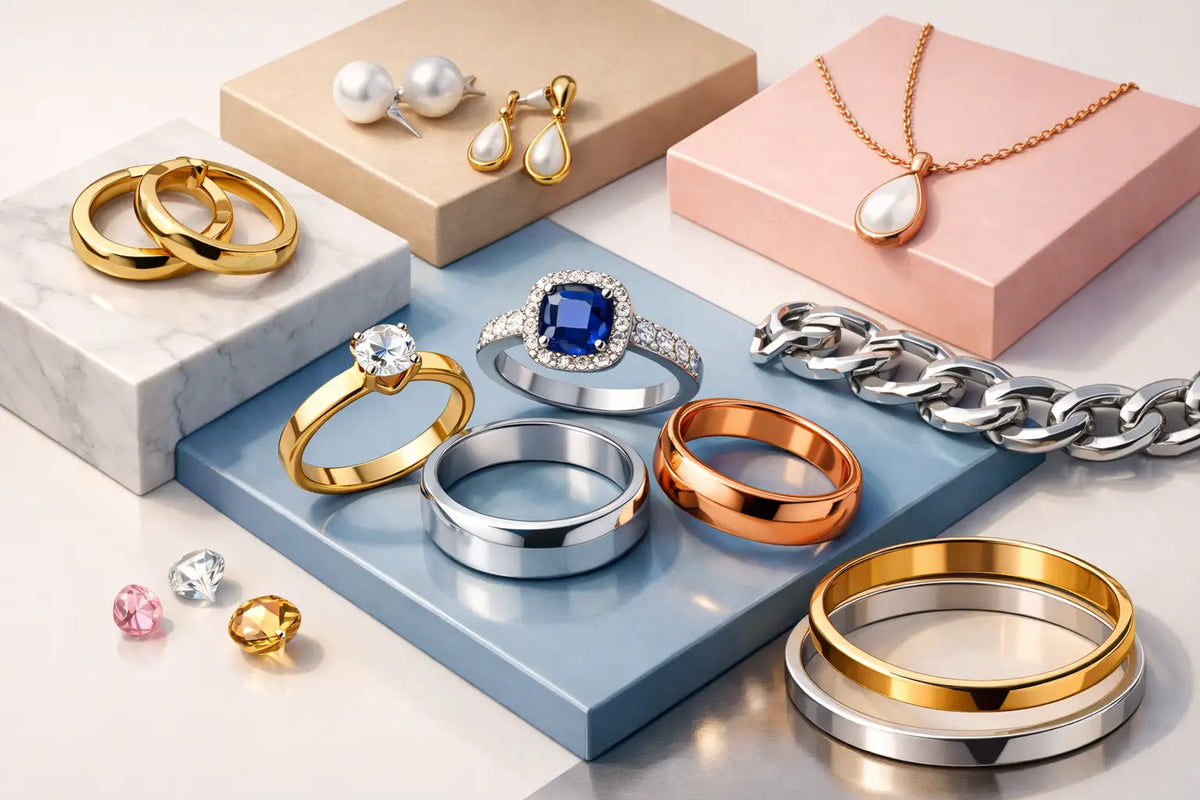
Color is part of the decision, too. Yellow gold lends warmth and classic richness. White metals feel crisp and polished, pairing beautifully with cool tones and modern silhouettes. Rose gold offers a soft, romantic glow. There are no rigid rules here. The metal that complements your wardrobe, your existing favorites, and your personal taste will always look most at home.
Jewelry metal guide: understand gold first
Gold is beloved because it is beautiful, versatile, and naturally resistant to tarnish. Pure gold is 24 karat, but it is relatively soft for daily jewelry. Most gold jewelry is blended with other metals to improve strength, which is why you will commonly see 10K, 14K, and 18K.
10K gold contains 41.7% pure gold. It is often a practical choice for pieces that receive frequent wear because its higher alloy content gives it added durability. Its color is usually a little less rich than higher-karat gold, and the alloy metals may be a consideration for those with sensitivities.
14K gold contains 58.3% pure gold and offers a thoughtful balance of color, value, and resilience. For many people, it is the sweet spot for everyday rings, necklaces, earrings, and bracelets. It has the warm character associated with gold while holding up well to regular use.
18K gold contains 75% pure gold. It has a deeper, more saturated color and a distinctly luxurious feel. Because it is softer, it is often best for earrings, pendants, and pieces worn with a little more care. It can also be an excellent choice for fine jewelry where richness of color is a priority.
Gold comes in several shades. Yellow gold gets its familiar warmth from alloys such as copper and silver. Rose gold contains more copper, creating its blush-toned finish. White gold is blended to create a silvery appearance and is frequently finished with rhodium plating for extra brightness. Over time, that rhodium finish can wear away, particularly on rings, and may need professional replating. That is normal maintenance, not a flaw.
Sterling silver: bright, versatile, and worth caring for
Sterling silver is a timeless choice with a luminous white finish and a more accessible price point than fine gold or platinum. It is made from 92.5% silver, usually combined with copper for strength. Look for a 925 mark when available, which indicates sterling silver.
Its main trade-off is tarnish. Exposure to air, moisture, lotion, fragrance, and household chemicals can cause silver to darken over time. The good news is that tarnish is usually removable. Gentle polishing and proper storage can restore its glow, making sterling silver a rewarding option for jewelry lovers who appreciate a little routine care.
Sterling silver works especially well for earrings, pendants, statement rings, and layered necklaces. Its cool tone creates a clean contrast against black, navy, jewel tones, and white, while also bringing a refined finish to relaxed linen or denim. A well-made sterling silver piece feels substantial without becoming overly precious.
Platinum and palladium for enduring wear
Platinum is one of the most durable and naturally white precious metals used in fine jewelry. It is dense, substantial, and especially well suited to engagement rings, wedding bands, and heirloom pieces that are meant to be worn for decades. Unlike white gold, platinum does not require rhodium plating to retain its white color.
Platinum can develop a soft patina rather than simply looking shiny forever. Some people love that lived-in character; others prefer to have it professionally polished from time to time. It is typically more expensive than gold, both because of the metal itself and because its density means more material is used in a piece.
Palladium is another naturally white precious metal in the platinum family. It is lighter than platinum and can be a wonderful option for those who want a cool-toned fine metal without as much weight. Availability varies more than it does with gold or platinum, so it is less common in many curated jewelry collections.
Gold-filled, vermeil, and plated jewelry explained
These terms can sound similar, but they describe very different constructions. Understanding them helps you compare value honestly and choose with confidence.
Gold-filled jewelry has a substantial layer of gold bonded to a base metal, usually brass. It is not solid gold, but the gold layer is much thicker than standard plating, making it a durable, attractive choice for regular wear when cared for properly.
Gold vermeil is sterling silver coated with a thicker layer of gold. It offers the look of fine gold with a sterling silver base and is often a lovely choice for contemporary earrings and necklaces. Because the outer layer can wear with friction, it benefits from gentler handling than solid gold.
Gold-plated jewelry has a thinner layer of gold over a base metal. It can be an excellent way to enjoy trend-led designs or occasion pieces at a lower price, but it is not designed to wear identically to solid gold. Sweat, water, perfume, and repeated rubbing can gradually affect the finish. Transparent material details make all the difference when shopping in this category.
Stainless steel, titanium, and other modern choices
Stainless steel is durable, low-maintenance, and resistant to tarnish. It is a smart material for minimalist styles and for anyone who wants jewelry that can keep pace with a busy routine. Its color tends to be a cooler gray-white than sterling silver or platinum, which gives it a distinctly modern look.
Titanium is remarkably lightweight and strong. It is often chosen for bands and sleek, architectural jewelry, particularly by people who dislike the feel of heavier metals. Its naturally gray tone is understated, and many people with metal sensitivities find it comfortable, though individual reactions always vary.
Brass and bronze bring a warm, antique-inspired finish at an accessible price. They can develop patina and may react with skin moisture, sometimes leaving a temporary green mark. That does not automatically mean the piece is poor quality, but it does make these metals better suited to those who enjoy their evolving character and do not require a completely maintenance-free finish.
Choosing a metal for sensitive skin
If jewelry has ever caused itching, redness, or irritation, look beyond a general claim of hypoallergenic. Skin reactions are personal, and that label does not guarantee that every wearer will have the same experience. Nickel is a common trigger, especially in certain base-metal alloys and some white metals.
Platinum, high-quality titanium, and nickel-free sterling silver are often favored by sensitive wearers. Higher-karat yellow gold may also be comfortable for some people, although the alloy still matters. If sensitivity is significant, ask for specific material information and consider testing a new piece with shorter wear before making it part of your everyday rotation.
Care that keeps your jewelry looking considered
A few small habits preserve the finish and structure of almost any piece. Put jewelry on after applying perfume, lotion, and hair products. Remove it before swimming, showering, exercising, or cleaning (although there are many folks who do wear jewelry 24/7 without problems). Store individual pieces separately, when possible, especially delicate chains and plated designs that can rub against harder jewelry.
For routine cleaning, a soft, dry polishing cloth is often enough. Solid gold, platinum, and many durable gemstones may tolerate gentle soap and water, but plated jewelry, pearls, and porous stones need more caution. When a piece has a special finish, intricate setting, or sentimental value, professional advice is the most dependable choice.
The most beautiful jewelry is not necessarily the piece made from the rarest metal. It is the piece whose color, comfort, and quality fit naturally into your life, then continues to feel like you long after you first put it on.
Written and edited by Dave Nobil and the Nobiliving Staff with AI help.