A gold vermeil necklace can look beautifully luminous against a simple blouse, then seem a little less bright after a few weeks of wear. That shift can be disappointing, especially when you chose it for its warm, polished finish. So, can gold vermeil tarnish? Yes, it can show tarnish or discoloration over time, but thoughtful care makes a meaningful difference.
Gold vermeil offers the look and feel of gold at a more approachable price point. It is a considered choice for everyday elegance, gifting, and building a jewelry wardrobe with pieces that feel personal rather than disposable. Understanding what it is made of and how it responds to daily life will help you enjoy it for much longer.
Can Gold Vermeil Tarnish?
Gold vermeil is sterling silver that has been coated with a thicker layer of gold. In the United States, true vermeil is generally made with sterling silver, plated with gold that is at least 10 karat, and has a gold layer of at least 2.5 microns thick. That construction sets it apart from standard gold-plated jewelry, which may use a thinner gold layer over a base metal such as brass.
Pure gold is highly resistant to tarnishing. The challenge is that gold vermeil is not solid gold. Its sterling silver core can oxidize when it is exposed to air, moisture, sulfur, skin oils, cosmetics, and household chemicals. If the gold layer gradually wears thinner, the silver beneath may contribute to a darker or duller appearance.
This does not mean a vermeil piece is poor quality or that it has been improperly made. Jewelry is worn close to the skin and moves through real life: humid summer days, hand lotion, perfume, workouts, travel, and storage in a bathroom. Even a well-crafted piece will benefit from intentional handling.
Tarnish, fading, and wear are not the same thing
These terms are often used interchangeably, but they describe different changes. Tarnish is a surface reaction, often appearing as dullness or darkened areas. It may be caused by moisture, air, or chemical exposure and can sometimes be gently removed.
Fading or wear happens when the gold layer becomes thinner from friction. Rings and bracelets are especially prone to this because they come into contact with desks, countertops, bags, soap, and frequent handwashing. Unlike light tarnish, worn plating cannot be polished back into place. A jeweler may be able to replate a treasured piece, depending on its construction and condition.
A third possibility is residue. Sunscreen, lotion, hair products, and soap can leave a film that makes gold vermeil look muted. This is often the easiest issue to address with a careful cleaning routine.
What Makes Gold Vermeil Darken Faster?
How quickly gold vermeil changes depends on the piece, the thickness of its gold layer, and how it is worn. A pair of earrings reserved for dinners and special occasions may stay bright for years. A favorite ring worn while cooking, exercising, showering, and sleeping will naturally face more exposure.
Body chemistry also matters. Some people perspire more, use skincare products with active ingredients, or have a skin pH that causes jewelry to dull more quickly. None of this means you should avoid vermeil. It simply means everyday jewelry should be chosen and cared for with the same consideration as a favorite leather bag or silk blouse.
The most common accelerators are water, chlorine, sweat, perfume, hairspray, lotion, cleaning products, and direct contact with other jewelry. Chlorinated pools and hot tubs deserve special caution because chlorine can damage metal alloys and affect plating more aggressively than ordinary tap water.
Simple Habits That Protect Gold Vermeil
The best care is less about complicated products and more about a few consistent rituals. Put your jewelry on after you have applied fragrance, makeup, sunscreen, and lotion. That one small change limits direct contact with ingredients that can build up on the surface.
For pieces you wear often, these habits help preserve their finish:
- Remove gold vermeil before showering, swimming, exercising, washing dishes, or cleaning.
- Take off rings before applying hand cream or using hand sanitizer, then allow your hands to dry fully.
- Store each piece separately in a soft pouch or lined jewelry box to prevent scratches and friction.
- Keep jewelry away from humidity, particularly bathroom counters and windowsills.
- Give pieces a gentle wipe with a dry, soft microfiber cloth after wearing them.
We have been told by folks that they wear their pieces 24/7, in the shower, cleaning the house, etc. without many problems. The goal is not to treat jewelry as too precious to enjoy. It is to avoid unnecessary exposure. A hand-selected vermeil pendant can be part of your daily look, but it will hold its glow longer when it is the finishing touch rather than an accessory worn through every task of the day.
How to Clean Gold Vermeil Safely
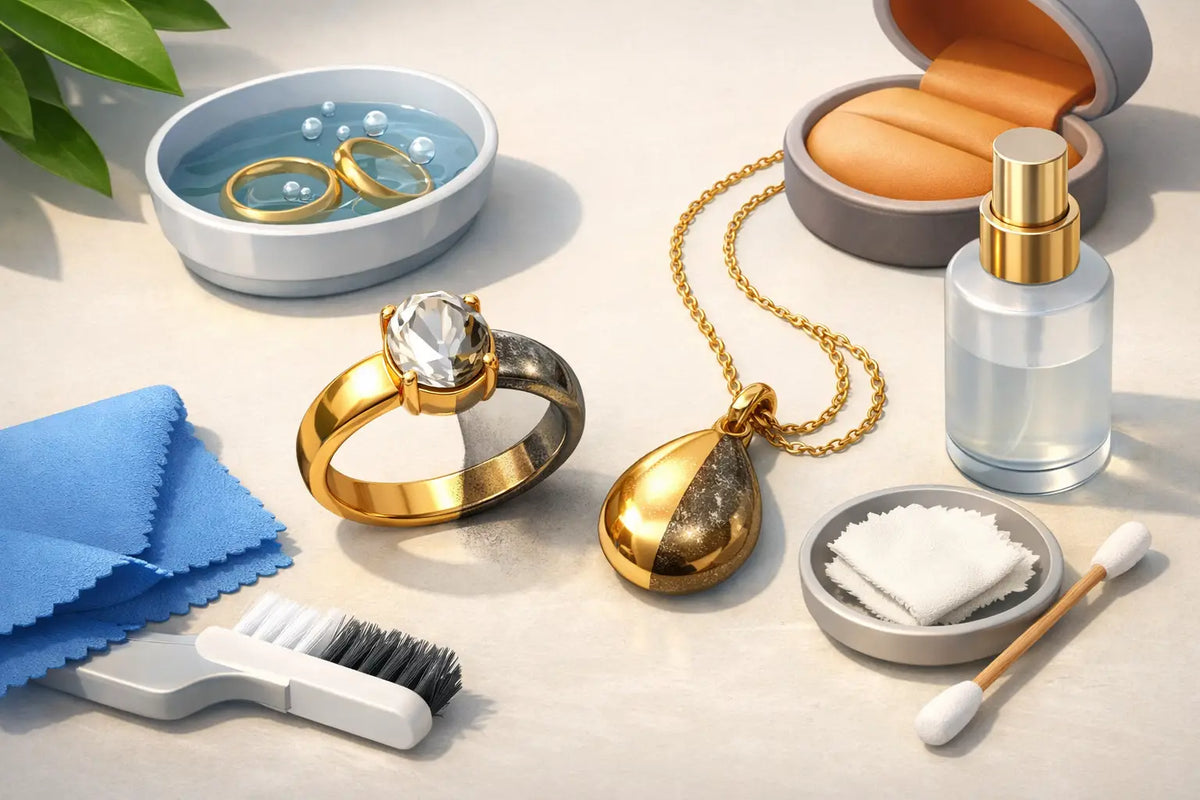
When a vermeil piece looks slightly dull, start gently. Use a clean, dry microfiber or jewelry polishing cloth made for delicate plated jewelry, and wipe with light pressure. This can lift surface oils and restore shine without putting unnecessary stress on the gold layer.
If there is visible residue, use a soft cloth lightly dampened with lukewarm water and a very small amount of mild soap. Wipe the piece rather than soaking it. Then use a separate damp cloth to remove any soap, dry it immediately, and let it air dry completely before storing it.
Avoid abrasive polishing cloths, toothpaste, baking soda, silver dip, ultrasonic cleaners, and harsh commercial jewelry cleaners unless the product specifically states that it is safe for gold vermeil. These methods may be appropriate for solid metals in some cases, but they can scratch or strip gold plating. The same goes for scrubbing with a toothbrush, even a soft one. When it comes to plated jewelry, gentler is better.
If a piece has gemstones, pearls, enamel, or intricate details, take extra care. Water and soap can settle in settings, and some stones are more porous or delicate than others. In those cases, a dry microfiber cloth is usually the safest first step.
When a Professional Is Worth It
If you notice significant darkening, uneven color, peeling, or a silvery tone showing through high-contact areas, stop polishing at home. Repeated rubbing may make worn areas more visible. A reputable jeweler can assess whether the issue is residue, tarnish, surface scratching, or worn plating.
For sentimental jewelry or a piece you wear constantly, replating may be a worthwhile option. It is not always necessary or cost-effective for every item, so ask about the expected finish, the gold karat used, and whether the piece can be replated again in the future. Real answers and clear expectations are part of buying and caring for jewelry with confidence.
Choosing Vermeil You Will Love Wearing
Quality starts with honest materials and thoughtful design. Look for clear descriptions that identify sterling silver as the base, specify gold vermeil rather than vague language such as “gold tone,” and share the gold karat when available. A thicker gold layer generally offers better longevity, though your care routine still matters.
Consider the style of the piece, too. Delicate pendants, earrings, and occasion bracelets often experience less friction than stackable rings or close-fitting bangles. If you want a piece for constant wear, a design with a more protected surface and a practical clasp may serve you better than an ultra-fine, highly detailed style.
Gold vermeil is not meant to imitate solid gold under every condition. It is a beautiful jewelry category in its own right: sterling silver at its core, finished in the warmth of gold, and designed to bring polished character to everyday moments. Wear it with care, store it thoughtfully, and let the pieces you choose become part of your style story rather than something kept away for a someday occasion.
Written and edited by Dave Nobil and the Nobiliving Staff with AI help.