A coffee table is often the visual pause at the center of a living room. It holds the practical pieces of daily life, from a cup of coffee to the remote, but it also has an outsized role in making the room feel considered. Knowing how to style a coffee table means finding the point where beauty and real life meet.
The most inviting tables do not look staged beyond use. They feel collected, balanced, and personal, with enough open space to set down a drink or prop up tired feet at the end of the day. Start with what your room needs, then choose a few hand-selected accents that give the surface warmth and character.
Start with the coffee table itself
Before adding a single object, consider the table's shape, scale, and finish. A long rectangular table benefits from a composition that moves across its length, while a round table is often strongest with one central grouping. Square coffee tables can handle a more symmetrical arrangement, particularly in a room with a tailored, orderly feel.
Material matters, too. A substantial wood table already brings texture, so it may need only a smooth ceramic vase and a small stack of books. Glass or metal tables tend to welcome softer elements, such as a woven tray, a sculptural bowl, or a folded throw nearby. The goal is not to disguise the table, but to complement what makes it distinctive.
Scale is the detail that keeps a display from feeling either crowded or oddly sparse. On a generous table, a single tiny candle can disappear. On a compact surface, several large objects can make the entire seating area feel less usable. Let the table's size set the limit, rather than trying to recreate a display from a larger room.
Style a coffee table in layers, not clutter
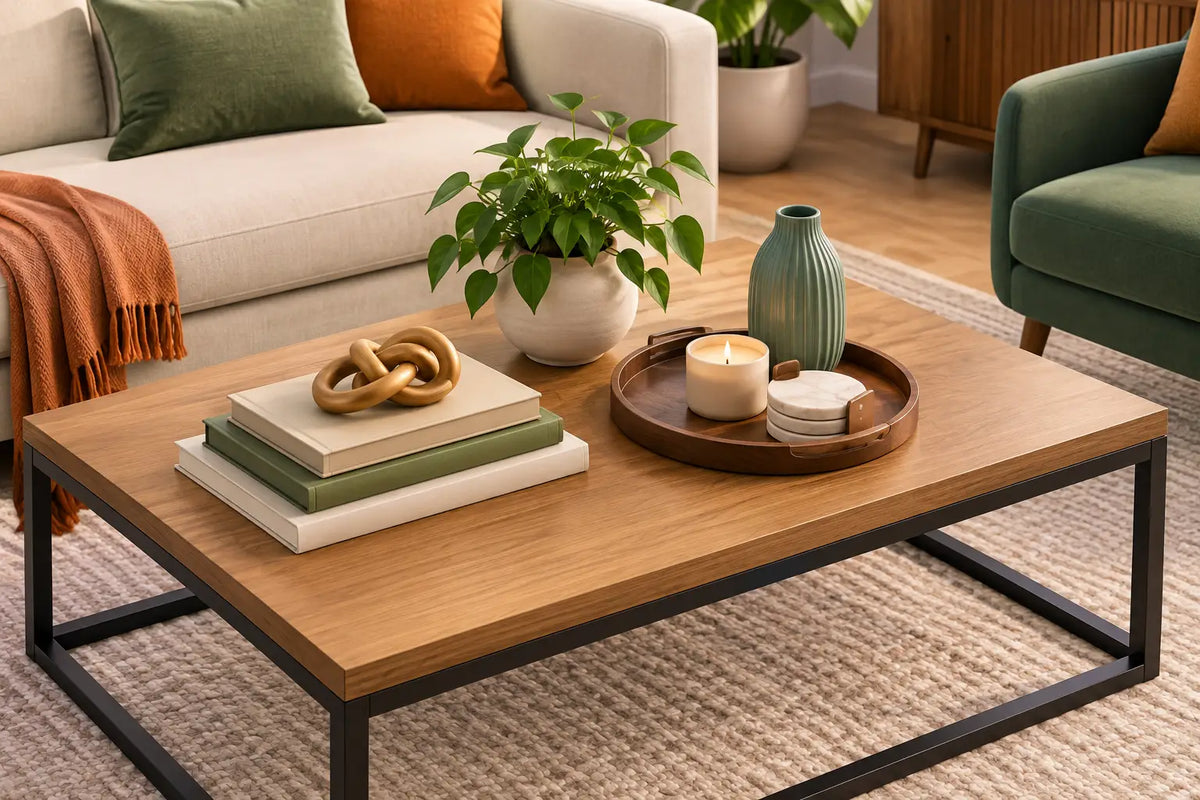
A polished arrangement usually has three kinds of elements: something grounding, something with height, and something personal. A tray or stack of books establishes a base. A vase, candleholder, or small piece of table art creates vertical interest. Then a meaningful object, such as a favorite found piece or a beautiful lidded box, gives the setting its point of view.
This approach creates variation without asking every item to compete. Choose pieces with contrasting but compatible finishes: a matte ceramic vessel beside a glossy art book, or a carved wood tray paired with a softly textured stone bowl. Repeating the same color and finish across every object can look flat. Too many unrelated finishes, however, can make the table feel accidental.
Keep the palette tied to the room. Pull a tone from the rug, artwork, pillows, or curtains, then repeat it in a small way on the tabletop. A warm amber glass accent can echo caramel leather seating. A quiet black object can connect to a dark lamp base or picture frame. These small visual conversations make a room feel coordinated without being overly matched.
Use a tray to create calm
A tray is one of the simplest ways to give a coffee table a sense of order. It visually gathers smaller pieces and makes it easy to clear the surface when guests arrive or a movie night calls for more room. On a large rectangular table, consider one tray at one end rather than placing it perfectly in the middle. The slight asymmetry feels relaxed and leaves useful open space.
Choose the tray for function as much as appearance. A raised-edge tray can hold a candle, coasters, and a small vessel with ease. A woven or wood option adds softness to a sleek table, while a lacquered or metal finish can sharpen a more casual setting. It should feel proportional to the objects it holds, not like a frame squeezed around them.
Let books bring personality and proportion
Coffee table books are valuable because they do more than fill space. Their horizontal shape grounds a vignette, their covers introduce color and pattern, and their subjects can say something about the people who live there. Art, travel, architecture, fashion, food, and photography all work beautifully when they reflect genuine interests.
Two or three books are generally enough for a small grouping. Stack them with the largest on the bottom, then place a small object on top if the surface still needs height. Avoid treating every book as a decorative prop. Leave one within easy reach, or open it occasionally to a favorite image. A home should invite interaction, not demand that everyone admire it from a distance.
Add height and a natural element
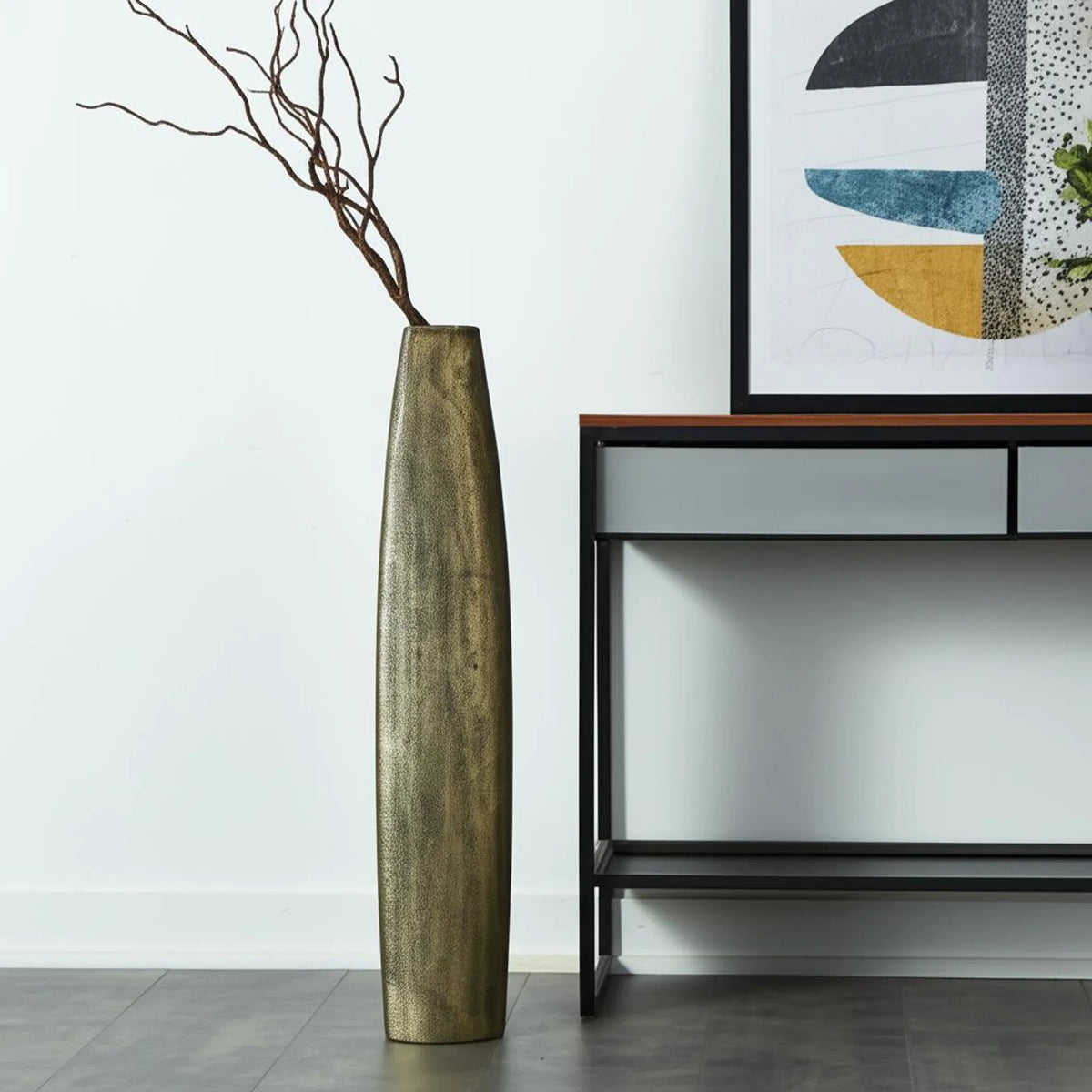
A low table needs a little lift, but not so much that it blocks sightlines across the sofa. A compact vase with branches, a floral arrangement, or a tapered candleholder can add the right vertical note. As a general rule, keep the arrangement low enough for conversation to move comfortably over it.
Natural elements prevent a composed tabletop from feeling overly polished. Fresh flowers are lovely, but they are not the only answer. A few sculptural branches, preserved botanicals, seasonal greenery, or even a bowl of textured natural objects can bring life to the room with less upkeep. If you prefer a minimal look, one well-shaped vase may be all that is needed.
Consider the season, but do not feel obligated to redecorate completely. In autumn, a deeper glass tone or a branch with warm leaves may be enough. During spring and summer, a lighter vessel and fresh green stems can shift the mood. A thoughtful base of books, trays, and lasting table art allows these smaller changes to feel easy.
Leave room for everyday living
The most common coffee-table styling mistake is filling every inch. A clear patch of surface is not unfinished. It is what makes the arrangement livable. It gives guests somewhere to place a glass, gives you space for a weekend breakfast, and allows each chosen object to be noticed.
Think honestly about how your household uses the room. If the coffee table is the regular landing place for snacks, board games, and movie-night drinks, build around that reality. A durable tray, coasters, and one simple accent may serve you better than a delicate, multi-piece display. If the room is used primarily for entertaining, you may have more freedom to create a fuller composition.
Practical pieces can still look refined. Coasters in a material that relates to the room, a handsome lidded box for remotes, or a sculptural bowl for small necessities can make daily function feel intentional. The difference is not whether useful items appear on the table. It is whether they have a purposeful place.
Match the arrangement to your design style
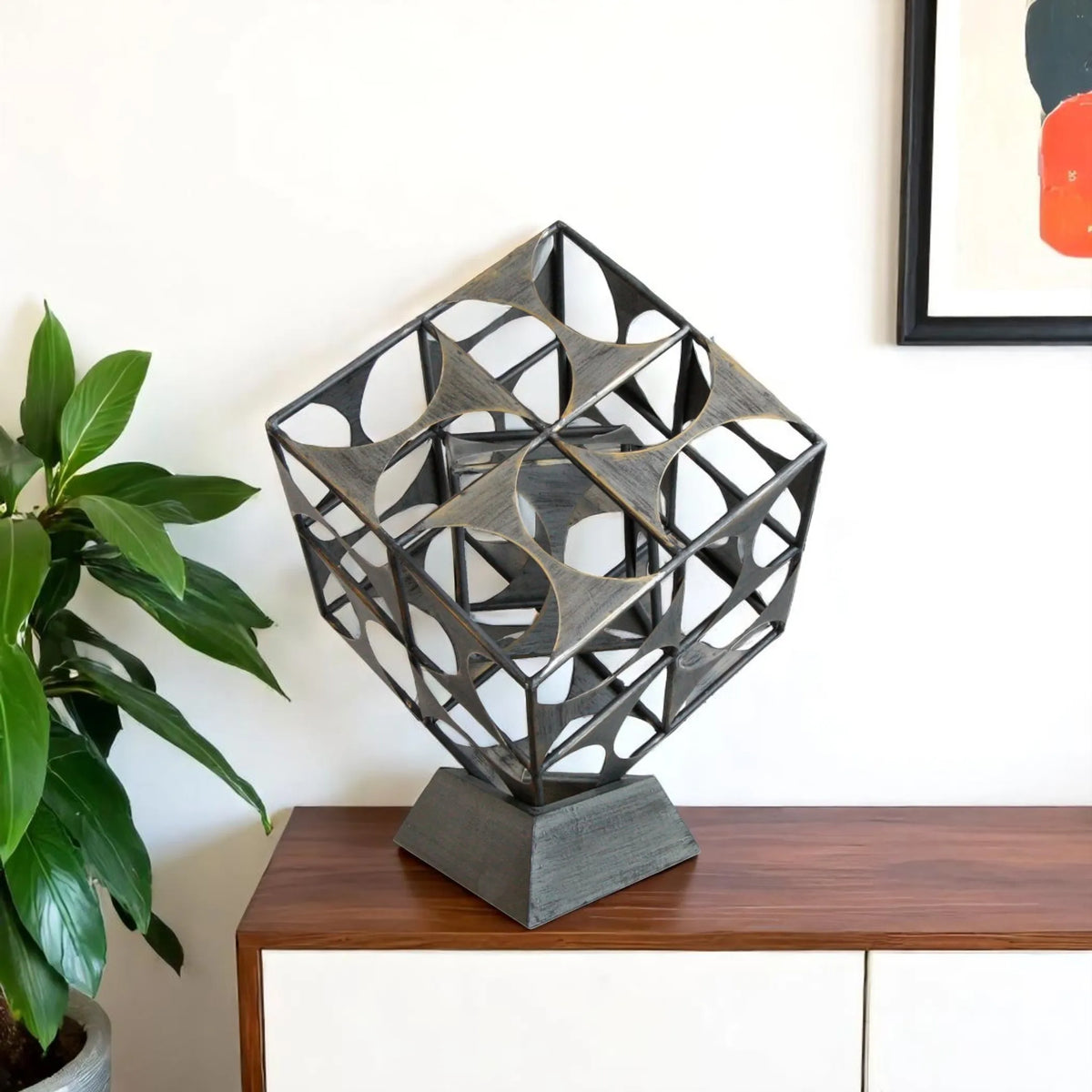
There is no single formula that suits every living room. In a modern space, favor clean shapes, restrained color, and one statement object with strong form. A ceramic vase, an art book, and a low sculptural bowl may be enough. In a more traditional room, layered books, a classic tray, and a floral arrangement can feel natural and welcoming.
For an organic or relaxed interior, lean into tactile materials such as woven fibers, wood, stone, and handmade-looking ceramics. A more glamorous room can support reflective glass, polished metal, or a dramatic candleholder, provided the rest of the composition remains edited. The best styling does not follow a trend at the expense of the room's existing character.
It also helps to look at the table from where you actually sit. Stand back at the room entrance, then view it from the sofa and favorite chair. A display may look balanced from above but visually heavy from across the room. Move one piece, remove another, and give the composition some air. Editing is often what makes a table look refined.
Refresh, rather than replace
Once you have a foundation you love, changing the look does not require starting over. Swap a book cover, change the stems in a vase, replace a candle, or rotate an object from a shelf into the arrangement. These small adjustments keep the room feeling cared for while allowing your favorite pieces to remain part of the story.
When you style a coffee table with a few beautiful, useful objects, the result is more than a photo-ready surface. It becomes a quiet expression of how you want your home to feel: welcoming, well considered, and ready for everyday moments.
Written and edited by Dave Nobil and the Nobiliving Staff with AI help.