A throw blanket can make a room feel finished in less than a minute, but only when it looks placed rather than dropped. Learning how to layer throw blankets stylishly is less about achieving a perfectly arranged look and more about creating softness, dimension, and a sense that the room is genuinely lived in. The best arrangements feel relaxed, yet every color, fold, and texture has a purpose.
A well-chosen throw also gives you an easy way to refresh a familiar sofa, reading chair, or bed without replacing larger pieces. Use it to echo an accent color, soften a tailored silhouette, or add warmth to a space that needs a little more character.
Begin With the Room's Existing Story
Before adding a second or third throw, look at the colors and materials already doing the visual work. A linen sofa, walnut side table, woven rug, and ceramic vase already establish a language. Your blankets should continue that language, not compete with it.
In a neutral living room, this might mean pairing ivory with oatmeal, camel, charcoal, or a muted olive. In a room with a more expressive palette, choose one throw that picks up a smaller accent from artwork, pillows, or table decor. The goal is connection, not exact matching. A navy throw beside a blue-gray pillow, for example, will feel richer than two pieces in precisely the same shade.
Also consider the mood you want to preserve. Crisp cotton and tailored folds suit a clean, contemporary room. Chunky knits, brushed textures, and fringed edges introduce a more relaxed, inviting mood. Neither approach is more stylish by default. It depends on whether the surrounding furnishings lean structured or casual.
Choose Contrast in Texture, Not Just Color
Layering works because the eye notices variation. If every throw has the same weight, weave, and finish, the arrangement can look flat even if the colors are beautiful. Combine materials that play different roles: a smooth cotton or lightweight wool throw can provide a clean base, while a tactile knit, bouclé, faux fur, or fringe detail brings depth on top.
Keep the contrast intentional. A heavily textured throw layered over another heavily textured piece can become visually busy, especially on a smaller chair. On the other hand, a plush throw over a fine woven blanket creates a pleasing balance because each material remains distinct.
The season matters here, too. In warmer months, layer a light cotton throw with a gauzy or subtly textured piece in tonal colors. For fall and winter, richer weaves and deeper shades make the same room feel more grounded. You do not need to store every light-colored throw once temperatures drop, but balancing a pale, airy textile with one weightier layer usually feels more considered.
How to Layer Throw Blankets Stylishly on a Sofa
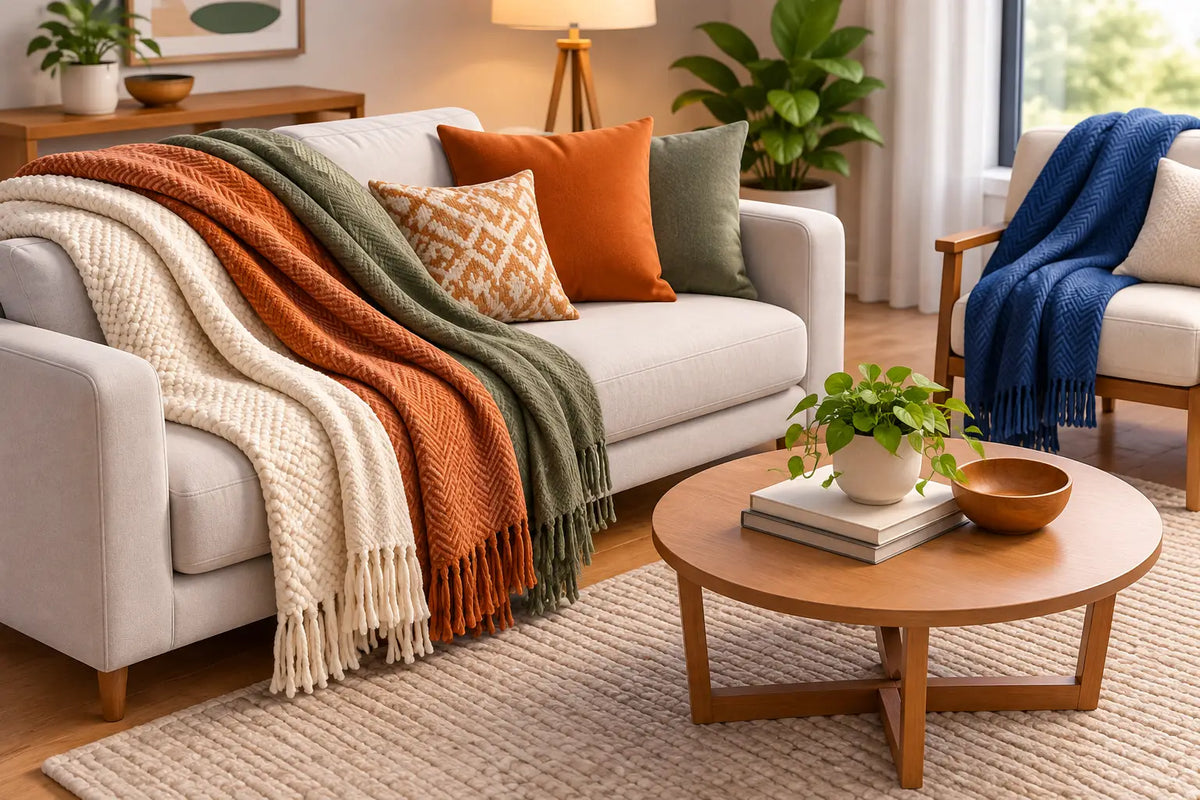
A sofa has enough width to support two throws, sometimes three, but restraint keeps it elegant. Start with a larger throw as the foundation. Fold it lengthwise once or twice, then place it over one arm or along one end of the seat. Let it cover enough of the upholstery to feel purposeful but avoid hiding the sofa's shape entirely.
Add a second, smaller throw with a different texture or a slightly deeper color. It can be draped more casually over the first, with one end falling toward the floor and the other tucked lightly into the seat cushion. This creates a layered look without making the sofa feel crowded.
If your sofa is compact, use just two blankets and keep them on one side. Spreading throws across both arms can divide the piece visually and make it appear smaller. A large sectional gives you more freedom: place one folded throw at the chaise and another on the opposite arm, then let a third accent blanket appear only if the room has enough visual calm to support it.
Pillows should not disappear beneath the layers. Arrange the throws first, then set pillows in front of or beside them, leaving a little breathing room between each texture. If there are already several patterned pillows, choose solid throws. If pillows are quiet and neutral, a subtle plaid, stripe, or woven pattern can add a welcome point of interest.
Give Chairs a More Edited Treatment
An accent chair asks for a lighter hand. One well-placed throw is often enough, with a second layer reserved for a generously sized chair or a reading nook that needs extra warmth.
For a polished look, fold a blanket into a long rectangle and drape it over the chair back or one arm. Allow a few inches of fringe or a soft edge to remain visible. For a more relaxed arrangement, make a loose trifold, place it over the arm, and let one corner fall naturally toward the seat.
Avoid a thick pile of blankets on a chair with a narrow frame. The chair should still feel usable and inviting, not like a storage spot. This is where a hand-selected, medium-weight throw can do more than several bulky layers. Quality you can count on is often visible in how a fabric falls, holds its shape, and keeps its texture after regular use.
Build a Restful Layered Bed
On a bed, throws work best when they have a clear job. A lightweight blanket can sit neatly across the lower third of the bed as a color band, while a softer, more textural throw rests casually on top. The contrast between tailored bedding and a relaxed top layer keeps the bed from looking overly formal.
For a queen or king bed, choose a throw wide enough to read as intentional from across the room. A too-small blanket centered at the foot can look lost. Fold the base layer into thirds, lay it horizontally across the bed, then place the accent throw slightly off-center. Let one side extend a little farther for an easy, collected finish.
If your duvet already has a bold print, keep the throws tonal and textural. If the bedding is plain, introduce a controlled pattern through one blanket only. A quiet stripe, windowpane check, or finely woven geometric can add interest without turning the bed into a competing collection of motifs.
Use Folds and Drapes With Purpose
There is no single correct fold, but each treatment communicates something different. A crisp, narrow fold feels tailored. A loose drape feels welcoming. A soft bundle at the corner of a sectional suggests comfort, while a carefully folded throw at the foot of a bed brings order.
The most natural-looking arrangements usually include one deliberate layer and one relaxed layer. If both throws are folded with sharp edges, the result can feel stiff. If both are bunched or heavily draped, it can look untidy rather than effortless. Give one piece structure, then let the other introduce movement.
Check the length before you step away. A throw grazing the floor can look luxurious in a low-traffic corner, but it may collect dust or become a tripping concern near a frequently used pathway. In homes with pets or young children, shorter drapes and washable fabrics are often the smarter choice. Style should support real life, not ask you to protect it constantly.
Edit Before You Add More
The easiest mistake is assuming that more layers always mean more warmth and personality. Sometimes one exceptional throw, thoughtfully placed, has more impact than a crowded stack. Step back from the room and ask whether each blanket adds color, softness, or texture. If it does none of those things, remove it.
This editing mindset is especially useful when mixing gift-worthy pieces, seasonal accents, and everyday essentials. A curated home feels personal because the details have room to be seen. At Nobiliving, that sense of everyday elegance begins with choosing accents that feel considered on their own and even better together.
When the room feels almost complete, add the final throw where your eye naturally wants a little softness: the cool leather chair, the clean-lined end of the sofa, or the foot of a freshly made bed. That small gesture can make the whole space feel more welcoming, ready for both quiet evenings and company.
Written and edited by Dave Nobil and the Nobiliving Staff with AI help.